About Us
- The Khmu Crafters
- Video About The Khmu
- Our Involvement With the Nature Bag
- A Benefit Analysis of the Khmu/Lao Poverty-Reduction Project September 2009
- Contact Us
Discover more about the Khmu culture by visiting Professor Damrong Tayanin’s website.
| Presented by Safe Home™ |
Nature Bag Khmu/Lao Poverty Reduction Project | Back to the top
This is our official business name as licensed in Oudomxai Province Laos. The essence of our purpose is linking the Khmu tribe of Northern Laos with the rest of the world. The economic foundation of these linkages is marketing Earth’s Greenest Bag™ an organic tote that is rugged, elastic and versatile. Proved by thousands of years of sustainability, it has as much relevance today as it did 5,000 years ago as humans today work to survive on our planet.
The Khmu Crafters | Back to the top
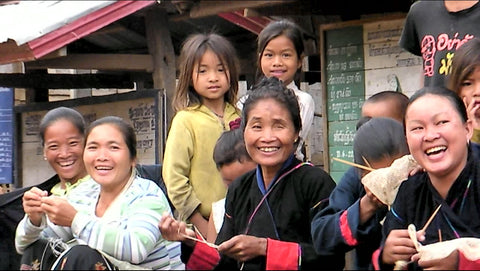
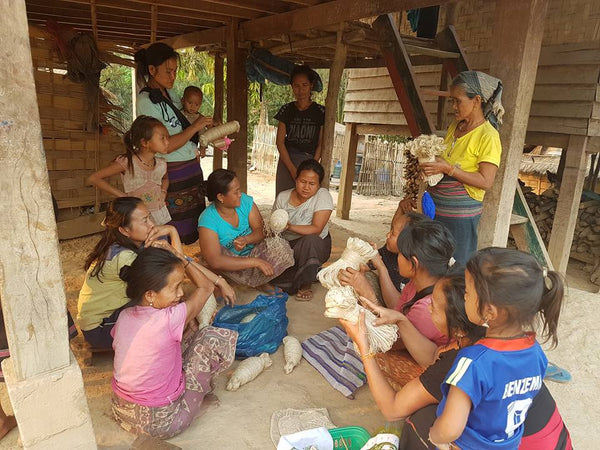
The Nature Bag is homemade in Laos, a landlocked country in Southeast Asia which has one of the lowest per person income levels in the world. The knowledge and skill used in its craftsmanship rest exclusively with the Khmu ethnic group, which has lived at high elevations on the mountainsides of Northern Laos for centuries.
Nature Bag Crafter Pia

- Ounkahm: How old are you?
- Pia: I am 48 years old.
- Ounkahm: How many children do you have
- Pia: I have 5 children.
- Ounkahm: How many in your family help you make Earth’s Greenest bag?
- Pia: Only two, myself and my oldest daughter.
- Ounkahm: What do you do with the finished bag?
- Pia: hmm… I sell, trade for clothes, blankets, bed sheets or anything that is needed for my family.
- Ounkahm: How long have you been creating Nature Bags?
- Pia: I have been making our organic totes since I was little. There was a time when there was not much interest in buying the bag, so most of us make the bag with the nylon because the material is cheaper and we can do it faster.
- Ounkahm: I see, I think, making bag with nature material is great for the environment and you can preserve your old culture of making bag.
- Pia: I agree with that if there is someone wants our Nature Bag.
- Ounkahm: Well, we want them!
Nature Bag Crafter Khia
- How long have you been making the organic bags? I have been making bags for home use since I was 12. Since the Nature Bag project started I have been making bags for about 4 years now.
- How long normally it takes to finish one bag? Well, it depends. It takes at least 5-7 days to finish one bag!
- How do you feel about the Nature Bag project? I think it’s very good project because it helps us to reduce our family expenses. We can sell our bags or trade for clothes, blankets and my children’s school uniform. I hope the nature bag project keep buying our bag… (laugh)
Nature Bag Crafter Nai
- How old are you? 35
- Where do you live?: Oudomxay Province, Laos
- How long have you been making the Nature Bag and who taught you?: I have been making Nature Bags for seven years and my Mother taught me.
- How did you use the Nature Bags before the Nature Bag Khmu/Lao Poverty Reduction Project?: Before the project I made the bags for home use. In 2008 I started making Nature Bag to sell and the continued success of the Nature Bag project will keep me and my family happy and with an income.
Nature Bag Crafter Nai
- How old are you? 45 years old
- How many children do you have? I have 5 children
- How long have you been making organic Nature Bags? I have been creating bags for 10 years now.
- How did you learn how to make the bag? I learned from my Mother when I was very young
- Oh, you must have been crafting Earth’s Greenest Bag before the Nature Bag Khmu/Lao Poverty Reduction Project. Yes, I made JungleVine® bags for my family. It’s good that now I can make bags to sell and earn money for my family. I will create bags for others as long as our Project keeps selling them to people everywhere.
Nature Bag Crafter Chuay
- Age: I am 35 years old.
- How long have you been making Nature Bags? I have been making Nature Bags for 15 to 16 years.
- Do you have any children? Yes, I have three children, my youngest is still in school.
- How do you spend the money you recieve from the sales of Nature Bags? I use the money for many things! Mainly for my son's school supplies and household items.
Nature Bag Crafter Vone
- Age: I am 30 years old.
- How long have you been making Nature Bags? I have been making Nature Bags since I was 14 years old but since 2007, I make the organic bags to sell to the Nature Bag Khmu/Poverty Reduction Project.
- What are your feelings toward the Nature Bag Project? I am happy for the project since the money received by the sales of our eco-friendly bags makes it possible for me to buy family necessities.
- Do you have any children? Yes, I have one son and two daughters.
- Are you teaching your daughters how to make Nature Bags? Of course! One of my daughters is already as skilled as I am in making the bags! I hope this project lasts a very long time so we can continue to make our green bags and sell them to everyone in the world!
Nature Bag Crafter Paeng

- Age: I am 28 years old.
- How many people are there in your family? There are 11 people in my family.
- Are you married and how many children do you have? Yes, I am married and have 2 children, a girl and a boy.
- What does your family do for living? Well, actually, we are mountain rice farmers and for extra income we make Nature Bags.
- Who taught you how to make Nature Bags? My mother and sisters.
- Do you enjoying doing it? Yeah! Creating bags have become part of my daily routine!
- How long have you been doing it? It’s been 4-5 years now.
Nature Bag Crafter Vinh

- Age: I am 28 years old.
- How long have you been making Nature Bags? I have been making bags for about 4-5 years.
- How did you learn to make the bags? My Mother taught me.
- How many children do you have? I have 3 children, the oldest is 7 years old.
- Do you like making Nature Bags? Yes! I and very happy that I am given the oppoartunity to create the bags and share our tradition with the rest of the world.
Nature Bag Crafter Yeum

- Age: I am 48 years old
- How long have you been making bag? I have been making bag for a very long time.
- How many children have you got? I have 9 children, the oldest is 30 and youngest is 16 years old.
- What do you spend for when you sold your bags? I spend the money I earn from making Nature Bag on family expenses and to buy new clothes for special occasions.
Nature Bag Crafter Kheum
- Age: I am 39 years old
- How long have you been making Nature Bags? I have been making bags since I was a child.
- How many children do you have? I have 5 children
- What do you do with with the money you receive from selling bags? I spend the money on my family and on my children's school supplies.
- How do you feel about the Nature Bag project? I am very glad to have somebody buying our handmade bags. We have a better quality of living because of it.
Nature Bag Crafter Vang
- Age: My parents died when I was very young so I am not sure about my age.
- Who took care of you as a child: I lived with my uncle and one of the villagers.
- Are you married: Yes, I have five children, three girls and two boys.
- How long have you been making Nature Bags: Since I was a child.
- What do you do for a living: I am a farmer.
- How much money have you made from selling bags: I’m not sure but I was able to buy a TV and a bike for my child.
- How many bags can you make in a month: I can make about twelve to fifteen bags a month if my children and my husband help me.
Nature Bag Crafter Pit
- Age: 39 years old.
- How did you learn to make Nature Bags: I watched some of the villagers make them and that was how I learned.
- How old were you when you learned how to make the bags: When I was 15 years old.
- How many bags can you make in a month: If my children or my husband help me I can make five to eight bags in one month.
- What will you do with the money you get from selling the bags: I will use it for house expenses, buy my children some treats and save for a TV *smile*!
- Age: 48 years old
- How did you learn to make Nature Bags: My Mother, sister and friends.
- How many children do you have: Six children, three girls and three boys
- How old is the oldest one: My oldest is thirty and the youngest is twelve.
- How long have you been making Nature Bags: Since I was ten years old.
- What will you do with the money you get from selling the bags: I will buy some sticky rice, food from the market and clothes for my children.
- How many bags can you make in a month: I can make two to three bags a month but if we sold more I would make more!
Nature Bag Crafter Heun
- Age: 51
- How many children do you have: 2 children, one girl and one boy
- How old are they: The oldest one is 27 and my youngest is 20.
- How did you learn to make Nature Bags: From my parent and one of the villagers.
- How long have you been making Nature Bags: Since I was 12 years old
- What will you do with the money you get from selling bags: I will save some of the money I make and will also buy some food and send my boys to school.
Nature Bag Crafter Chom
- Age: 47
- How did you learn to make Nature Bags: I learnt from my parent, friends and have been making Nature Bags since I was 15 years old.
- How many children do you have: four children, three girls and one boy. All of my children are in school and the oldest will be attending high school this year.
- What will you do with the money you get from selling bags: Buy some food, school supplies for my children and some new clothes.
- How many bags do you make in a year: It depends on how many bags are purchased. If a large number of bags are bought, I will make a lot. Usually though I make about 20 bags a year.
The Khmu are the indigenous people of Northern Laos. Their rich culture dates back thousands of years. Some scholars believe it to be 5,000 years old, which would make it among the most enduring.
Some Khmu continue to live at a subsistence level, searching the forests for their basic needs — food, medicine and fiber for clothing and shelter to protect from environmental elements. Many have no monetary income.
Their bags offered to the world on this website have been essential to their survival allowing for the gathering of essentials. Today, as it was a thousand years ago, the loss of a day’s harvest if a bag were to fail or to slip off a shoulder and fall from a steep mountainside could be critical. The availability of the Nature Bag worldwide is perfectly timed with the current urgency for sustainability in all lifestyles.
During the past 25 years, basic educational opportunities have been extended to most Khmu children. This has allowed many to choose to leave the traditional villages and integrate into mainline Lao culture. Most of those who have left maintain strong ties to their families and continue to celebrate their traditions. Those who remain prefer traditional life and the opportunity to pass traditions on to their children.
Since 2004 some of those remote villages have been reached by electricity and mobile telephone service. This has brought the opportunity for more efficient linkages between the ancient culture and the rest of the world.
Our poverty reduction project is designed to strengthen and extend those links, giving the traditional a means to progress technologically and economically while remaining rooted in and preserving the ancient ways. Our mission can be summarized as being a means of strengthening in depth and economic power the inevitably evolving links between the Khmu and general society. We hope to enhance the empowerment of the Khmu as important participants in the rapidly progressing Laotian nation.
“The Forest is our Life” video is a product of The Khmu Non-Timber Forest Product Research and Conservation Project. The project’s purpose was to protect natural resources, thus securing Khmu traditional livelihood.
We offer it here to allow the modern world a better understanding of the Khmu and their lives. It also presents lessons on sustainability applicable to the future of humankind on our planet.
We acknowledge and offer special appreciation to Rachel Clarke, the maker of the documentary, for allowing us to use her brilliantly crafted work.
Professor Damrong Tayanin (Khmu name Kam Raw) of the Department of Linguistics and Phonetics of Lund University in Sweden, grew up in a remote Khmu village. He has put together a website that offers excellent information about Khmu culture. His work can be seen by clicking here.
Your NatureBag allows their grandchildren to have books for school, money to pay for health care, the benefits of electricity in their villages.
Our Involvement With the Nature Bag | Back to the top
Project Organizer and Managing Director Bounsou Keoamphone spent his early childhood in a village that has dozens of Khmu settlements nearby. Although the Khmu did not trade their bags (even with nearby neighbors) frequently Khmu children would use one as a school bag. Thus at a young age Keoamphone learned about the Nature Bag.
A few years ago Keoamphone gave an American man a Khmu bag as a souvenir after guiding him to a remote area deep in the jungles of Asia. It was a trinket to show friendship and to remind of an exotic adventure, seemingly too small and fragile to be useful.
The American travels light, even on journeys around the world. Had the primitive bag not
been virtually weightless and easily folded into a tiny nearly flat bundle, it would have remained in rural Asia. But it came to Iowa USA because it was insignificant additional luggage.
Usually uninterested in souvenirs, he put the gift aside. About 6 months later a reusable canvass supermarket bag used to tote tools, parts and supplies on handyman projects was not large enough to carry everything needed to do a roof repair. The Asian souvenir seemed to be sized right for what could not fit in the apparently larger and stronger canvass bag.
Being of a practical rather than a sentimental inclination, the American chose to use the “fragile souvenir,” reasoning that if it could get its contents onto the roof before failing, enough of the supplies and parts would be consumed during the roof work that the canvass bag would be adequate to take remaining items back to the ground.
Not only did the “souvenir” not fail, it also held much more cargo than expected, expanding around its contents, gently gripping to keep things in place. It had other special qualities: It did not slide down the sloping roof like the canvass bag tended to do. It kept its contents in place, securely enclosed, protected from sliding down the roof and falling to the ground. It was amazing as a tool carrier!
The next day the bag was placed in frequent use to see what extremes it could endure. Nearly every day for 2 years that Nature Bag was used for shopping, as a gym bag (including carrying sweaty clothing back home), transporting books, audio/video equipment and DVD ’s, picking up trash, hauling stacks of newspapers for catch-up reading on extended journeys, harvesting garden produce, carrying picnic items, collecting bottles and cans for recycling, as a laundry bag, for hiking, even as an overnight bag. It was exposed to lots of sweat, sun, heat, cold, rain, snow, ice, leaking liquids while frequently bloated and stretched from volumes of heavy cargo. It required no care, and when empty, it would rest on a shoulder without being noticed, or easily it could be slipped into a pocket.
When a sharp object snagged and severed one of the jungle vine cords, the American feared that the fabric would unravel and the miraculous bag would be useless. Amazingly, the small hole grew very slowly. Larger holes developed only after nearby JungleVine® was snagged or cut.
That Nature Bag, with some gaps so large that carrying small items is impossible, now hangs on a wall as a piece of memorabilia and work of art, its remaining in-place JungleVine® cord seemingly as strong as ever. The seam, strap and strap attachment techniques show no signs of weakness. The decorative colors applied to the JungleVine® have faded or disappeared entirely, although colorful cotton threads continue to entertain around the opening, and the black bands of dyed jungle vine cord are as they were the day it left Laos. Its original light tan has become more gray, but the color change was so subtle that you can detect it only by comparing it with a new bag. In the years that bag was used, it never seemed soiled and never was cleaned.
The American, now retired due to physical disability, has provided most of the “seed” financing for the poverty reduction project. More about him can be seen by clicking here. There are some wonderful Khmu images posted there as well.
A Benefit Analysis of the Khmu/Lao Poverty-Reduction Project September 2009 | Back to the top
Slightly more than 10,000 Nature Bags have been purchased directly from the Khmu families who have made them in their homes. The first few thousand bags were acquired via person to person negotiations with a representative of each family on a bag per bag basis. Subsequently bags were purchased at generally uniform prices both makers and buyers agreed were market values. And we have been moving towards “placing orders” for bags monthly via informal Khmu maker networks specifying design and size factors and quantities. Under the current system. we have declined to buy a few bags that have been presented for purchase if quality and other specifications were not met.
The American has invested more than US$100,000 cash in the project and incurred approximately an additional US$40,000 in expenses, none of which has been reimbursed. Bounsou Keoamphone, the project’s managing director, has invested the equivalent of approximately US$3,000 cash and incurred approximately an additional US$5,000 in expenses, approximately 50 percent of which have been reimbursed by the project. Neither Keoamphone nor the American has received any salary, return on their investments, any other form of monetary compensation or other material benefits.
Additionally, both have donated thousands of hours of personal time to the project.
Other non-cash contributions with market values totaling the equivalent of at least US$70,000 have been made by dozens of other individuals and organizations as goods and services used by the project and its organizers.
By design, there has been no significant government or NGO involvement other than advice sought by the project organizers, although efforts are made to keep all relevant parties informed about project activities. Less than US$1,000 has been paid to various units of the Lao government for business licenses, permits, translation and documentation. Gifts valued at less than US$50 have been received by Thai customs personnel to facilitate transit of bags through that country. Substantial import duty payments have been made to the government of the United States of America usually at specified tariff rates but occasionally at rates the project believes to have exceeded levels provided for by statutory law. Shipping and import broker fees have totaled approximately US$15,000, some of which included taxes and other charges received by various governments. Nearly US$80,000 or the equivalent has been used in promotion and marketing.
Fewer than 10 percent of the purchased bags have been distributed, some for revenue at both wholesale and retail prices. Total revenue realized has been less than US$5,000, all of which has been reinvested in the project.
Fragmentation and isolation of production sources/purchasing points and substantial fluctuation in the values of the currencies involved (US Dollar, Thai Baht, Lao Kip) over the duration of the project make precise analysis of the amounts received by the beneficiaries impossible. The only precise data is from initial purchases of fewer than 80 bags in 2007 by a trusted German banker, then a volunteer for the project, who paid Khmu makers an average of the then equivalent of approximately US$5 per bag.
However, from what the organizers have seen and evaluated personally during 2009, it is believed that the overwhelming majority of the expended funds, except as noted above, have benefited the families of approximately 100 extremely skilled and proficient bag makers in a cluster of about 10 Khmu villages. This represents a minute percentage of potential bag makers in Laos.
Economically-deprived relatives of Mr. Keoamphone (not of the Khmu ethnic group) are involved in project administration and in the acquisition, labeling and handling/shipping/storage of bags in remote areas. They have received significant (for them) financial benefit, believed to total the equivalent of less than US$3,000.
The project organizers hope to have their monetary investments returned sometime in the future. But the timing of such return, if it occurs, cannot be predicted.
Contact Us | Back to the top
This website is operated by Hawkflight Ltd., a closely-held corporation established April 1984 under the rules and laws of the State of Iowa, United States of America.
This website is operated by and the responsibility of Hawkflight Ltd.
Our mailing address is:
Box 1822,
Des Moines, IA 50305-1822
USA
Our courier/freight delivery address is:
514 S.E. Aster Court
Ankeny, IA 50021
USA
Here are some email addresses for contacting us:
Wholesale/Retailer Inquiries: sales@naturebag.org
Customer Service: service@naturebag.org
To reach us by phone or fax, dial +1-515-244-8909. This is a PC-based messaging service that offers no live person but provides a convenient means of communications between the project and the world.
Each Nature Bag is made in Laos PDR of natural materials and purchased for export by project volunteers at a price determined by the Khmu family who crafted it. The members of those families and their predecessors have refined a primitive tool into today’s Nature Bag, a convenient, efficient and environmentally friendly means of carrying things in the modern world. Its users in the developed world benefit not only because of its green usefulness and practicality, but also because it reminds others of the importance of sustainable fashion, environmental awareness and participatory poverty elimination.
Because of our project, these families have decided to share their “green” knowledge and skill with their close-by neighbors who live in the forests of the Asian mountainsides as well as with their more distant neighbors around our planet. By doing so they have new opportunities to improve their lives and to speed access to electricity, which will make living more convenient, productive and comfortable.
May they be wise in using their new wealth, making changes prudently and always respecting nature and the rich cultural traditions of their forefathers!
<!-- Start of New StatCounter Code for Default Guide -->
<!-- End of New StatCounter Code for Default Guide -->

Facebook
Twitter
Merchant Circle
Google Buzz
Reddit
MySpace
Bebo
Yahoo Buzz
StumbleUpon
Digg